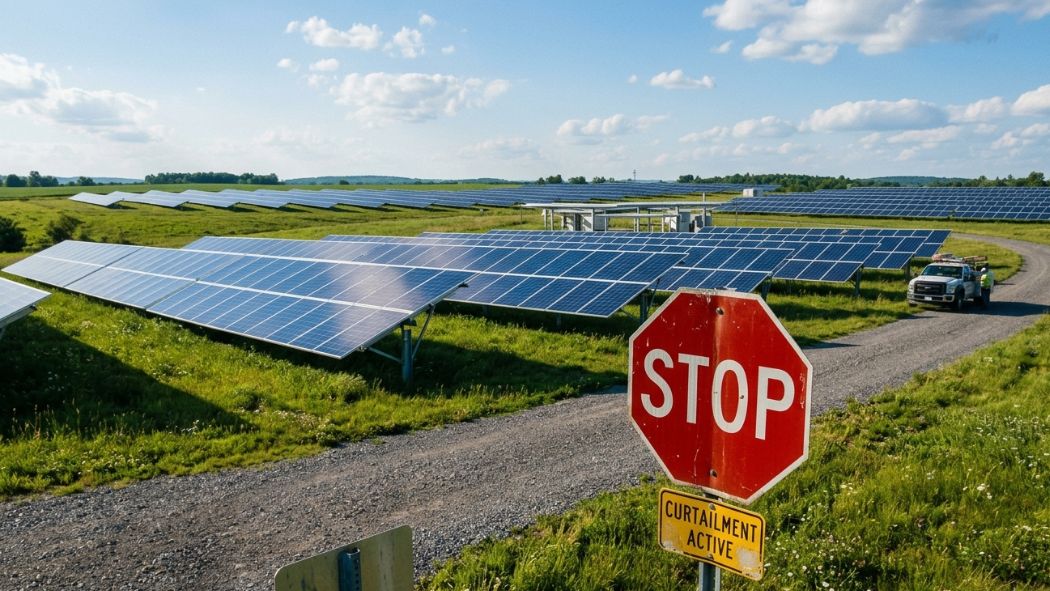
In the current energy transition landscape, where renewable penetration breaks records every month, a term has emerged that particularly concerns investors and asset managers: curtailment. But do we truly understand its impact on a project’s bottom line?
What is curtailment and why does it occur?
To understand what curtailment is, we must visualize the electrical grid as a highway with limited capacity. The Grid Operator is the one who decides who enters this highway with priority. Curtailment (or “spillage”) is the forced reduction of renewable energy generation by the Transmission System Operator (TSO) to maintain the balance between supply and demand, or to avoid saturating transmission lines.
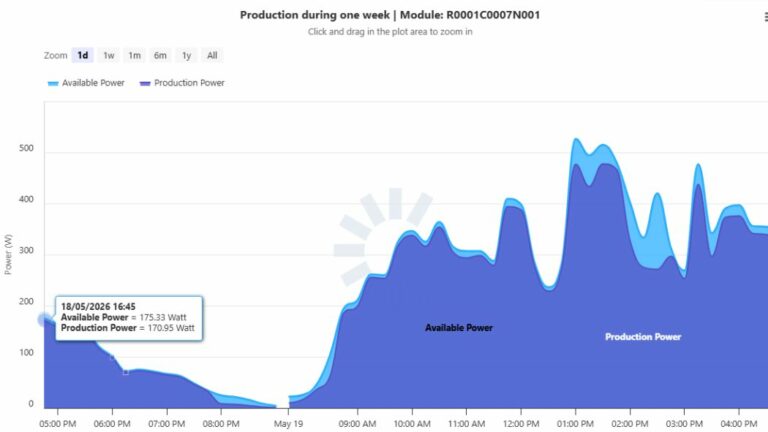
Basically, when there is “too much” solar energy and the grid cannot absorb or transport it, plants are ordered to disconnect or reduce their power output. In essence, photovoltaic curtailment represents a lost opportunity for clean energy and, consequently, revenue that simply evaporates.
The impact on Asset Managers and profitability
For an Asset Manager, curtailment is the enemy of the Internal Rate of Return (IRR). When a plant suffers unscheduled shutdowns by system order, it results in:
- Direct loss of revenue: Energy not injected is energy not billed.
- PPA Uncertainty: Long-term Power Purchase Agreements may be penalized if minimum generation thresholds are not met.
- Component wear and tear: Sudden power ramps (up and down) can affect the lifespan of the inverters.
Real-time monitoring and O&M: Weapons against curtailment
While solar energy curtailment largely depends on external decisions (from the grid operator), how a plant reacts to these events determines its financial success. This is where Clever Solar’s technology comes into play.
1. Instant reaction and data validation
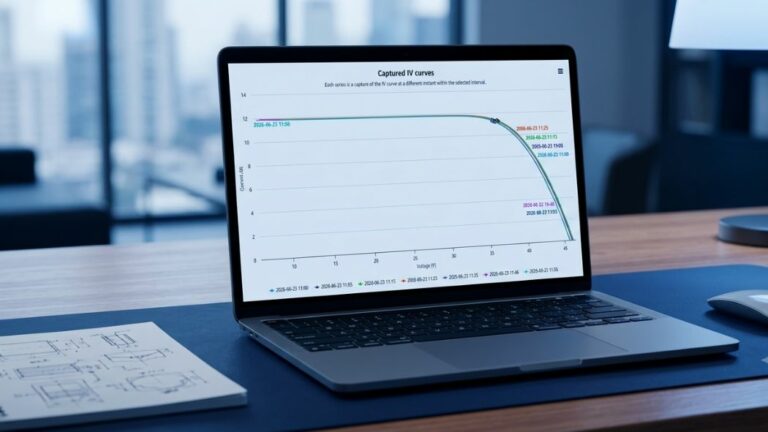
Real-time monitoring allows for the recording of when, how much, and why a curtailment event has occurred with surgical precision. Furthermore, it is a powerful tool for evaluating the economic impact in detail. Without these data, the Asset Manager is ‘blind’ when it comes to claiming compensation or justifying to investors why plant performance has fallen below the expected P50/P90.
2. O&M optimization to offset losses
In an environment where curtailment reduces your gross income, the only way to protect the net margin is through savings in Operation and Maintenance (O&M) costs.
- Predictive Maintenance: If we know the system will force a plant shutdown due to curtailment at certain hours, we can schedule panel cleaning or technical inspections during those same periods.
- Reduced travel: Advanced monitoring prevents technicians from traveling for diagnostics that can be done remotely, optimizing every euro of the operational budget.
The future: Storage and Data Intelligence
Curtailment is not going away; in fact, forecasts indicate it will increase as we install more GW of capacity. The solution lies in hybridization with Battery Energy Storage Systems (BESS)—allowing “excess” energy to be stored and released when the grid has capacity—and in intelligent data-based management.
At Clever Solar, we help turn data into decisions. Understanding curtailment not just as a technical issue, but as a manageable financial variable, is what separates mediocre plants from high-performance infrastructure.
How much is curtailment costing your asset portfolio this quarter? It’s time to measure it to defeat it.